
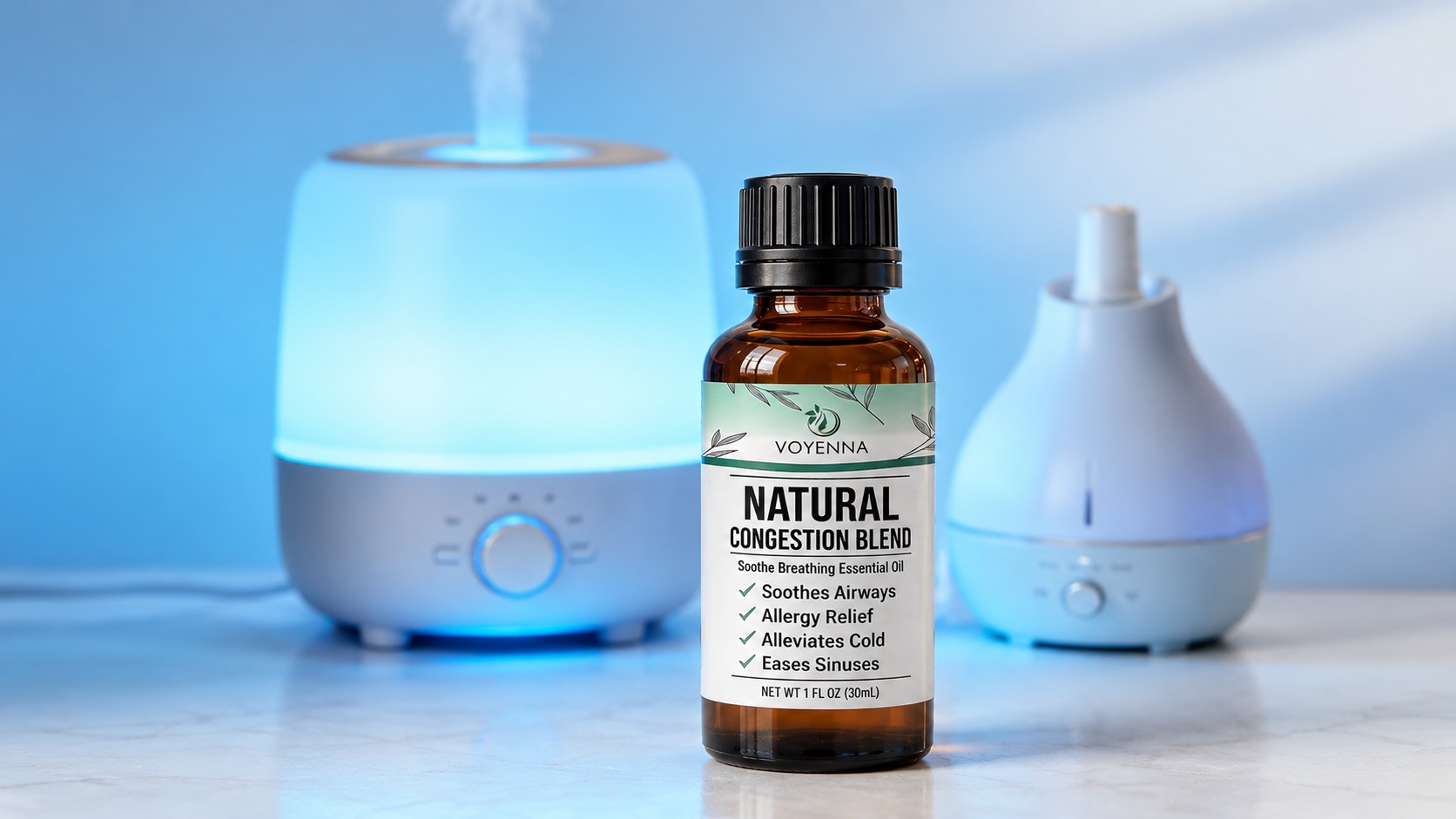
Safe aromatherapy use
Diffuser or Humidifier?
Choosing the right kind of mist for essential oils, dry air, and a gentler breathing-comfort routine.
Two machines can sit on the same nightstand, make a similar-looking mist, and do completely different jobs. That difference matters when the air feels dry, your nose feels stuffy, or you want to bring eucalyptus and peppermint into the room without damaging a device.
Diffuser vs. humidifier: what is the difference?
A humidifier is built to raise the amount of moisture in the air. A diffuser is built to disperse a small amount of essential oil as aroma. Some ultrasonic diffusers use water and create visible mist, but their small reservoirs and output do not make them substitutes for room humidifiers.
| Device | Main job | What belongs inside | Best fit |
|---|---|---|---|
| Humidifier | Adds moisture | Water, following device instructions | Dry-feeling rooms |
| Essential oil diffuser | Disperses aroma | Water and oil as directed, or oil in a waterless model | Aromatherapy and scent rituals |
| Oil-compatible humidifier | Adds moisture with a separate aroma feature | Water in the tank; oil in the approved tray or pad | Both functions in a compatible device |
Humidifier for moisture. Diffuser for aroma.
When a humidifier makes more sense
Reach for a humidifier when the room itself feels dry. Heating, air conditioning, weather, and low indoor humidity can leave the nose, throat, lips, and skin feeling uncomfortable.
When a diffuser makes more sense
Choose a diffuser when your goal is a eucalyptus-forward morning, a cooling peppermint note, or a calmer evening atmosphere—not a meaningful increase in room humidity.
The U.S. Environmental Protection Agency notes that humidifiers are commonly used to relieve discomfort associated with dryness. More humidity is not always better: the EPA recommends keeping indoor relative humidity at no more than 50 percent and reducing use if moisture condenses on windows, walls, or nearby surfaces.
A humidifier also needs routine care. For portable units, the EPA recommends emptying the tank, wiping surfaces dry, and refilling daily, along with cleaning every third day. Follow the manufacturer’s instructions for your model.
Should you use a humidifier or diffuser for congestion?
It depends on what is making the room uncomfortable.
- If the air feels dry, a clean humidifier can add moisture.
- If you want a fresh eucalyptus or peppermint aroma, use an essential oil diffuser.
- If you want both, operate separate devices or use a humidifier specifically designed with a separate aroma feature.
- If symptoms are severe, persistent, unusual, or worsening, seek medical guidance rather than relying on either device.
Can a diffuser work as a humidifier?
Usually, no. A water-based diffuser may add a very small amount of moisture, but its purpose, reservoir, and output are designed around aroma. It generally cannot humidify a room the way a properly sized humidifier can.
That visible stream can be misleading. Mist tells you that droplets are entering the air; it does not tell you that the device can meaningfully manage room humidity.
Can you put essential oils in a humidifier?
Only when the specific humidifier is designed for them. Look for a dedicated oil tray, aroma pad, essential-oil compartment, or clear manufacturer statement that the device supports aromatherapy.
Unless the instructions explicitly say otherwise, do not add essential oils directly to the water tank. Oils can cling to components, affect some plastics, leave residue, complicate cleaning, or interfere with operation. If the humidifier is water-only, let it handle moisture and use a diffuser for the oil.
For a deeper explanation, read Can You Put Essential Oils in a Humidifier?
Can you run both at the same time?
You can use both in the same room when each device is used according to its instructions, but start gently. Keep the units on stable, water-resistant surfaces with space around them, monitor room humidity, and avoid filling a small room with an overpowering aroma.
People respond to scent differently. Extra care is appropriate around children, pets, pregnancy, nursing, medical conditions, or anyone with scent or respiratory sensitivity. A qualified health or veterinary professional can provide guidance for individual circumstances.
Diffuser and humidifier FAQs
Which is better for a bedroom: a humidifier or diffuser?
Use a humidifier when the bedroom air is dry and a diffuser when you want aroma. The better choice depends on the room, not on which device produces prettier mist.
Do all humidifiers have essential oil trays?
No. Many humidifiers are water-only. Check the manual, product label, or manufacturer’s website before using oil.
How many drops should I use in a diffuser?
Follow the directions for both the diffuser and oil. Room size, reservoir size, ventilation, and scent sensitivity all matter, so begin modestly rather than assuming more is better.
Does a humidifier help essential oils work better?
It can. If you are using an essential oil blend for congestion comfort, sinus discomfort, or allergy-season support, a little moisture in the room alongside the essential oil aroma may help alleviate discomfort associated with dryness, congestion, or allergy symptoms. Use the oil in a separate diffuser or in a humidifier’s manufacturer-approved oil tray or aroma pad—not directly in a water-only tank.
The bottom line
A humidifier changes moisture. A diffuser changes aroma. Once you know which experience your room needs, the choice becomes much simpler.
If you want both moisture and a fresh eucalyptus-forward ritual, keep the systems separate or choose a humidifier with a manufacturer-approved aroma tray. Simple, intentional use is usually the most comfortable place to begin.