
Can You Put Essential Oils in a Cool-Mist Humidifier? Check This Before Adding a Drop
A clear way to tell whether your machine can handle essential oils, where the drops belong, and when a separate diffuser is the better choice.
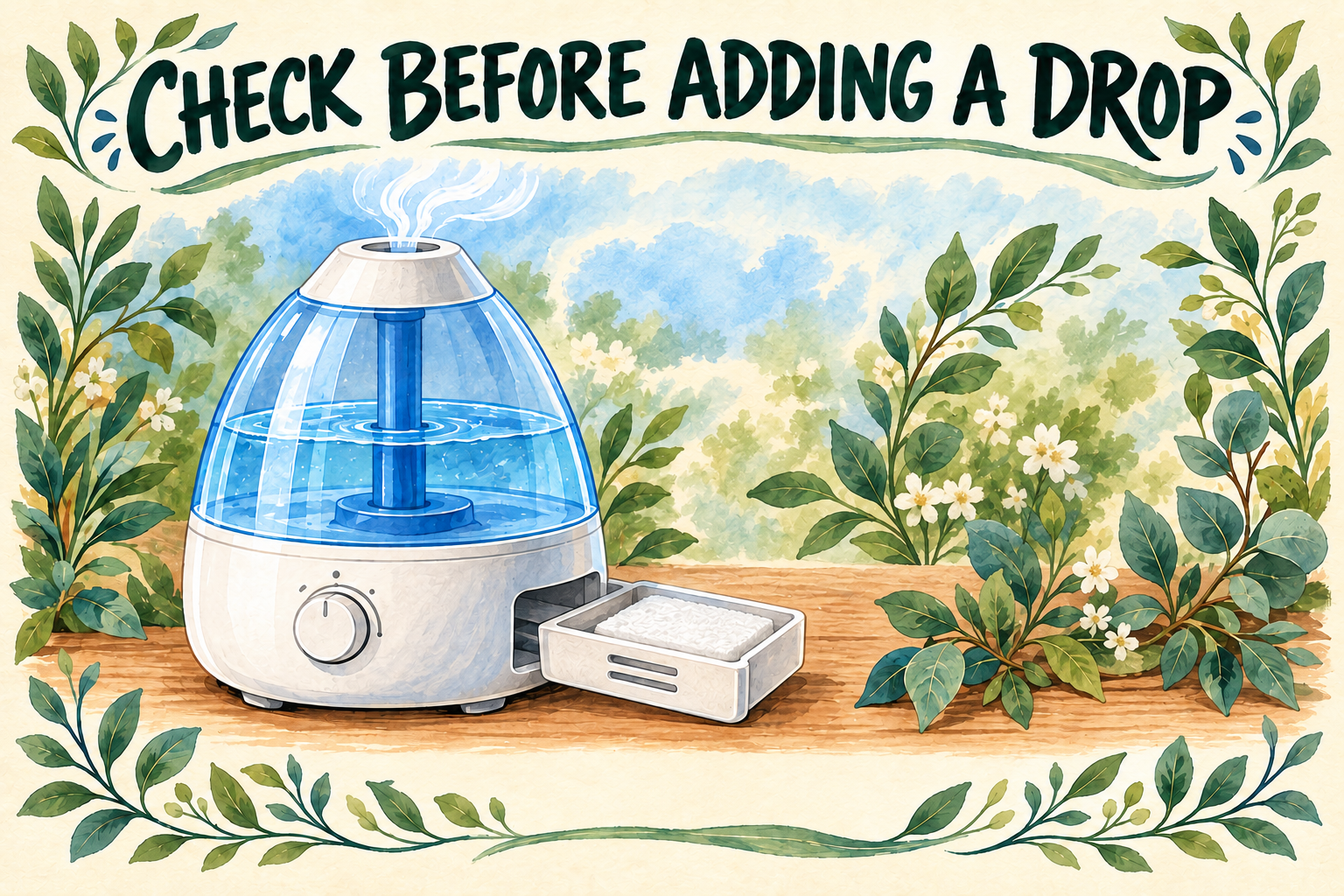
Can you put essential oils in a cool-mist humidifier?
Only when the manufacturer says the exact humidifier is designed for essential oils. Use the dedicated aroma tray, pad, medicine cup, or oil-compatible reservoir named in its instructions. If the manual describes a water-only tank, keep essential oils out of that tank and use a separate diffuser for aroma.
Cool mist can look the same whether it comes from a humidifier or an essential oil diffuser, but the machines are not interchangeable. A humidifier is built to add moisture to the room. A diffuser is built to disperse aroma. Some newer humidifiers include a separate aroma feature, while others can be damaged by oil.
The safest answer is not based on the shape of the machine or the kind of mist you see. It comes from the manual for the exact model in front of you.
Use the tray or pad exactly as the manufacturer directs. Keep the oil separate from the water tank unless the manual clearly says otherwise.
A small number of models are made with oil-resistant tank materials. Follow that model’s directions and do not assume another humidifier works the same way.
Add water only. Use a separate essential oil diffuser if you want aroma in the room.
Why does the manual matter so much?
Essential oils are concentrated and may interact with plastics, seals, filters, ultrasonic components, or other parts that were designed only for water. The placement also changes how the machine handles the oil. A separate aroma pad sits outside the water pathway, while oil poured into an unsupported tank moves through parts that may not be oil-resistant.
Manufacturer instructions vary even within the same brand. Levoit, for example, sells aroma pads for specific compatible models and warns users not to add essential oil to the water tank or base. Some Vicks models use a separate scent pad or medicine cup, while an oil-compatible model may give different directions. The model number matters more than a broad label such as “cool mist.”
Ultrasonic and evaporative cool-mist humidifiers are not the same
Many compact cool-mist humidifiers are ultrasonic. They use rapid vibration to create a visible mist. Evaporative models use a wick or filter and a fan. Both add moisture, but their internal materials and aroma options vary.
| Device feature | What it usually means | What to do |
|---|---|---|
| Aroma tray or pad | The device has a separate place intended for fragrance. | Use only the approved pad or tray and follow the manual. |
| Medicine cup | The unit may accept a named liquid inhalant or essential oil outside the tank. | Use only products and amounts allowed by that model. |
| Oil-compatible reservoir | The manufacturer specifically designed part of the water path for essential oils. | Follow the exact model instructions and oil label. |
| No aroma feature listed | The tank should be treated as water-only. | Keep oil out and use a separate diffuser. |
Check these five things before adding a drop
- Find the model number. Look on the base, label, box, or product page.
- Search the manual for “essential oil,” “aroma,” “scent pad,” or “medicine cup.”
- Identify the exact compartment. A small side drawer is different from the water tank.
- Check the allowed product type and amount. Do not substitute a concentrated blend when the manual names only a proprietary pad or liquid inhalant.
- If the instructions are silent, treat the tank as water-only. Contact the manufacturer or use a separate diffuser.
How much essential oil should you use?
There is no universal number for every cool-mist humidifier. The correct amount depends on the device design, aroma tray or pad, room size, airflow, and the product directions. Start with the amount permitted by the manufacturer. Add more only if both the device instructions and essential oil label allow it.
More oil does not automatically mean better. A stronger concentration can make the room feel overwhelming and may irritate sensitive people. If the aroma feels uncomfortable, stop the device, ventilate the room, and reset with less the next time.
Use the humidifier for moisture, not as a substitute diffuser
A humidifier may make a dry room feel more comfortable by adding moisture. An essential oil diffuser adds aroma. If you want both, you can run a clean humidifier for moisture and a separate diffuser for scent, or use a humidifier with a manufacturer-approved aroma feature.
The U.S. Environmental Protection Agency recommends keeping indoor relative humidity within a comfortable range and not exceeding 50 percent. Too much moisture can encourage biological growth and create damp surfaces. A small hygrometer can help you see whether the room actually needs more humidity.
Cool-mist humidifier care still matters
Oil compatibility is only one part of a good routine. The EPA recommends emptying, drying, and refilling portable humidifiers daily, using low-mineral water such as distilled water, and cleaning portable units every third day unless the manufacturer gives different instructions. Cool-mist and ultrasonic humidifiers can disperse minerals or microorganisms from standing tank water, which is why regular care matters.
Use Natural Congestion Blend only with an approved aroma feature
Voyenna Natural Congestion Blend is a 1 fl oz / 30 mL eucalyptus-forward aromatherapy blend with eucalyptus, peppermint, rosemary, tea tree, and lemon. For a cool-mist humidifier, use it only in a dedicated aroma tray, pad, or oil-compatible compartment approved by the manufacturer. Keep it out of a water-only tank.
If your humidifier does not support essential oils, use the blend in a separate essential oil diffuser and let the humidifier handle moisture.
Cool-mist humidifier FAQs
Can I put eucalyptus oil in a cool-mist humidifier?
Only if the exact model is designed for essential oils. Use its approved aroma tray, pad, medicine cup, or oil-compatible reservoir. Keep eucalyptus oil out of a water-only tank.
Can essential oils damage an ultrasonic humidifier?
They can damage an unsupported device or its components. Some ultrasonic models include a separate aroma tray, while others are water-only. Check the model instructions before using oil.
Can I put essential oil on the humidifier filter?
Not unless the manufacturer specifically instructs you to do so. Oil may affect an unsupported filter or the way the machine operates.
Is an aroma pad the same as adding oil to the tank?
No. An aroma pad holds oil in a separate compartment outside the water reservoir. That separation is intentional, so use the pad as directed and keep oil out of the tank.
Can I run a humidifier and diffuser at the same time?
Yes, when both devices are used according to their instructions and the room does not become overly humid or strongly scented. Monitor humidity, ventilation, and how the room feels.
Should I use tap water in a cool-mist humidifier?
The EPA recommends low-mineral water, such as distilled water, to reduce mineral buildup and airborne “white dust.” Follow the humidifier manufacturer’s water guidance.