
Breathing comfort
How Many Drops of Essential Oil Should You Put in a Diffuser?
Start with the room, then adjust the aroma gently.
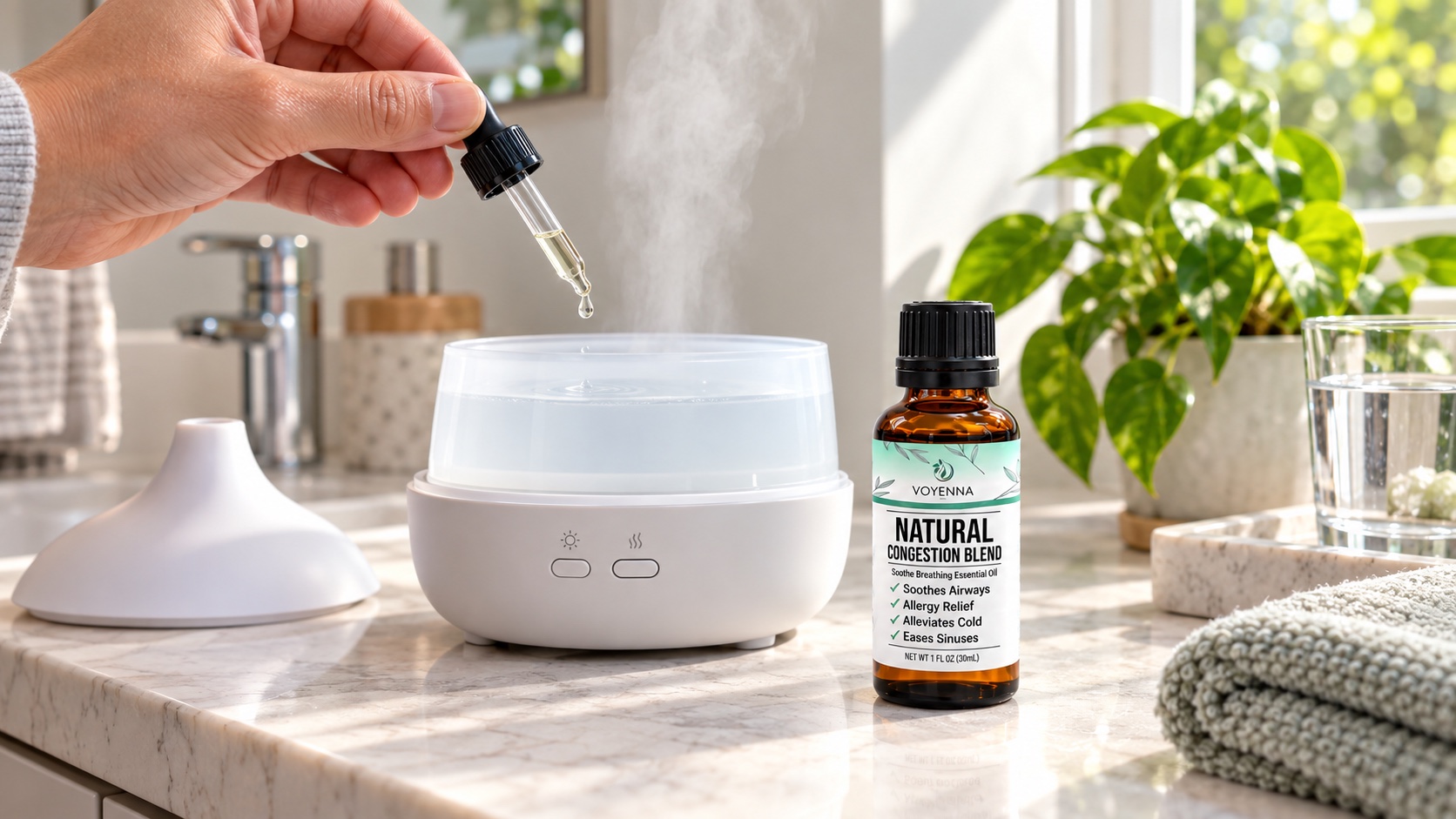
When a room feels heavy, dry, or stale, it is tempting to treat essential oil drops like a volume knob: more drops, stronger result. But a better diffuser routine usually starts with the room itself.
Why there is no perfect drop count
Diffusers are not all built the same. A small ultrasonic diffuser on a bathroom counter does not behave like a larger unit in an open bedroom. A 100 mL reservoir, a 300 mL reservoir, and a waterless diffuser can all distribute aroma differently.
The essential oil matters too. Lavender may feel soft at a level where peppermint feels sharp. Eucalyptus-forward blends, including Voyenna Natural Congestion Blend, are meant to smell fresh and open, so they are usually better when they support the room instead of taking it over.
Begin with 1 to 3 drops, especially in bathrooms or closed offices where aroma builds quickly.
Begin with 3 to 5 drops in a bedroom or home office, then adjust slowly next time.
Begin with 5 to 8 drops only if your diffuser manual and room size support it.
How many drops of congestion essential oil should I use in my diffuser?
With a eucalyptus-forward congestion essential oil, start low. For Voyenna Natural Congestion Blend, a gentle first use might be 2 to 4 drops in a typical diffuser, then adjust based on room size, ventilation, and scent strength. The goal is a fresher-feeling room and a breathing-comfort ritual, not an overpowering cloud.
If the scent feels too strong, turn off the diffuser, open a window or door, and let the room reset. If the scent feels too faint, add one drop next time rather than doubling the amount all at once.
The room changes everything
A small room concentrates aroma faster. Large rooms dilute aroma, especially when doors are open or air conditioning is running. The same number of drops can feel gentle in one room and too much in another.
Scent sensitivity matters
Use extra care around children, pets, pregnancy, nursing, older adults, people with asthma or respiratory sensitivity, and anyone who dislikes strong fragrance.
A simple diffuser routine
Follow your device instructions first. As a general comfort habit, start with a shorter session rather than running a strong aroma continuously.
The people in the room matter even more
Essential oils are concentrated plant extracts. The National Center for Complementary and Integrative Health describes aromatherapy as the use of essential oils from plants, often by inhalation or diluted skin application, and notes that evidence for many health uses remains limited. That does not mean a diffuser cannot support a room ritual. It means the routine should stay thoughtful.
Poison Control advises using essential oil products according to label directions and keeping bottles out of sight and reach of children and pets.
Diffuser drops and humidifier trays are not the same thing
A diffuser is built for aroma. A humidifier is built for moisture. If you are using a humidifier with an essential oil tray or aroma pad, follow that manufacturer’s instructions for the tray. Do not treat the humidifier water tank like a diffuser unless the manufacturer explicitly says it is oil-compatible.
The U.S. Environmental Protection Agency recommends careful humidifier use and cleaning because portable humidifiers can disperse materials from the tank into indoor air. Keep oils in the right device or in the approved oil tray, and keep water-only humidifiers water-only.
For the deeper device question, read: Can You Put Essential Oils in a Humidifier? and Diffuser or Humidifier?
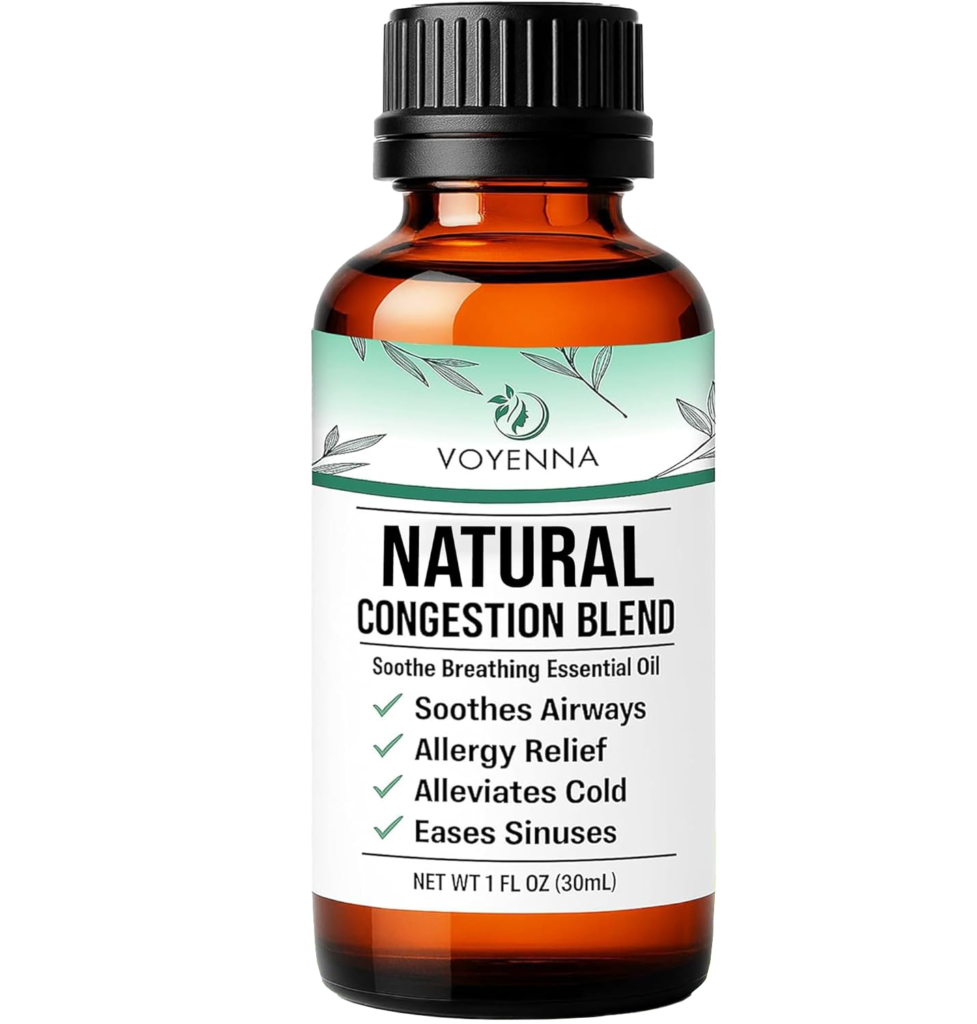
A eucalyptus-forward blend for a clearer-feeling room
Voyenna Natural Congestion Blend is a 1 fl oz / 30 mL eucalyptus-forward essential oil blend with eucalyptus, peppermint, rosemary, tea tree, and lemon. It is best used as part of a room aroma routine for congestion comfort, allergy-season support, cold-season routines, and a clearer-feeling space.
Start gently in a diffuser. Let the scent open the room without dominating it. If you want moisture too, use a clean humidifier separately or use only the humidifier’s manufacturer-approved oil tray or aroma pad.
Diffuser drop FAQs
Can I put 10 drops of essential oil in a diffuser?
Only if your diffuser manual and room size support that amount. For strong oils and blends, 10 drops can be too intense in small rooms. Start lower and increase gradually.
Is eucalyptus oil strong in a diffuser?
Yes. Eucalyptus usually reads as a strong, fresh, cooling aroma. Blends with eucalyptus and peppermint should be started at the lower end until you know how they feel in your room.
Can too much essential oil in a diffuser bother you?
Yes. Too much scent can feel irritating, especially in small or poorly ventilated spaces. If the room feels overwhelming, stop the diffuser and add fresh air.
Should I add more oil when I stop smelling it?
Not always. Your nose can adapt to a scent after a while. Step out of the room for a few minutes before adding more.
Can I diffuse essential oils all day?
For most homes, intermittent use is a better starting point than continuous diffusion. Follow your device directions, keep the room ventilated, and use extra care around sensitive people or pets.
The bottom line
Start with the room, not the bottle. Use fewer drops first, give the aroma time to spread, and adjust slowly. With a strong breathing-comfort blend like Voyenna Natural Congestion Blend, the best routine is usually the one that makes the room feel clearer without making the scent the whole room.