
Safe aromatherapy use
Can You Put Essential Oils in a Humidifier?
What to know before you add a few drops—and when a diffuser is the better choice.
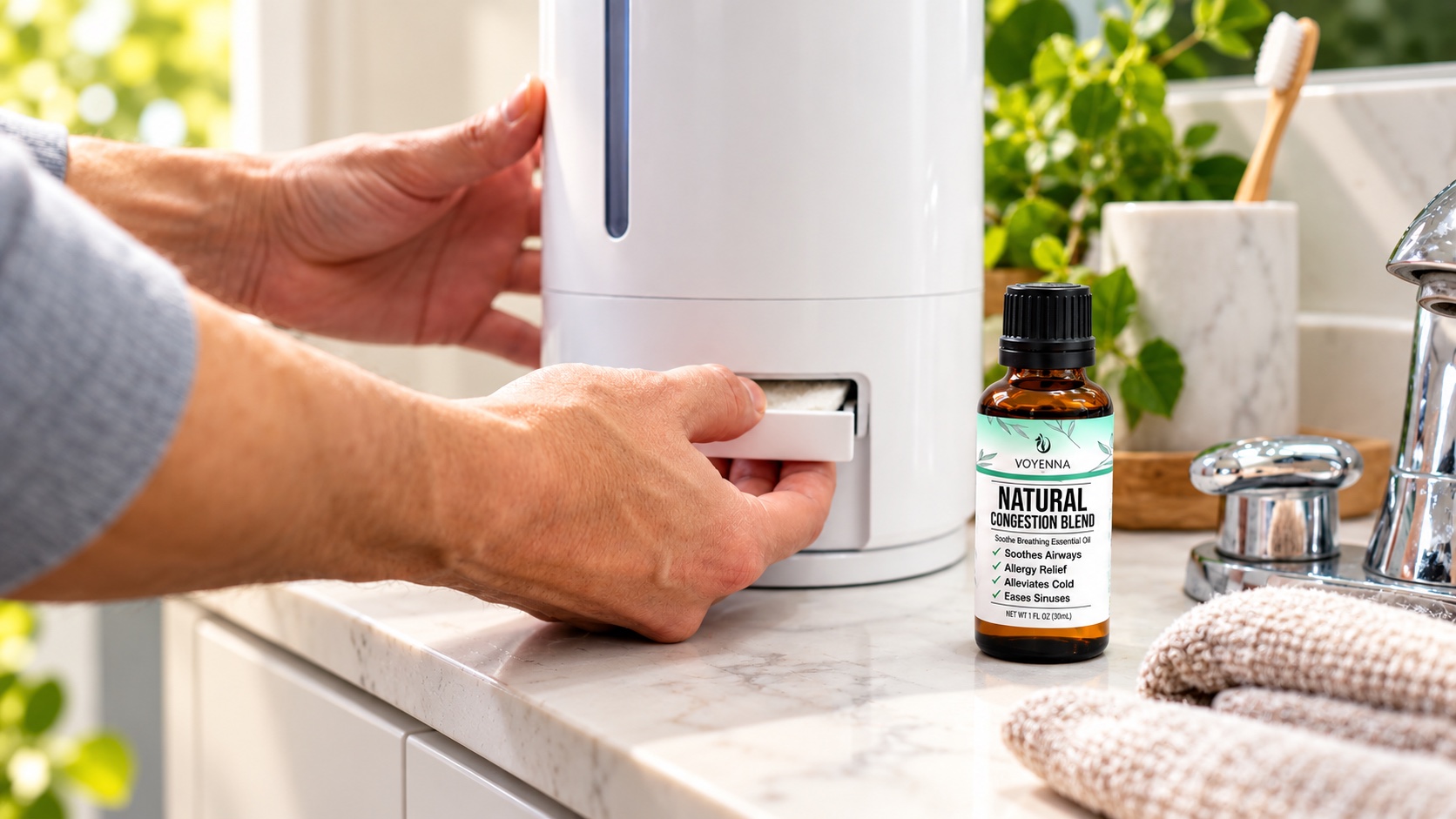
When your nose feels stuffy or the air in your room feels dry, a humidifier can feel like the obvious place to add a few drops of essential oil. Congestion, cold symptoms, and allergy symptoms can make the whole room feel heavier. The humidifier is already making mist. The bottle is already on the nightstand. The whole thing seems like it should work.
Sometimes it does. Sometimes it is a bad idea.
If your humidifier has a separate essential oil tray, aroma pad, or oil compartment, follow the manufacturer’s directions for that feature. If it does not, use a diffuser for essential oils and let the humidifier do what it does best: add moisture to dry air.
Adds moisture to dry air. Best for water-only use unless the unit says it supports oils.
Disperses aroma. Best when your main goal is scent, ritual, or a clearer-feeling space.
A separate aroma pad or tray can make some newer humidifiers oil-compatible.
Humidifiers and diffusers are not the same thing
A humidifier is made to increase moisture in the air. That can be especially helpful when indoor air feels dry from heating, weather, or seasonal changes. The U.S. Environmental Protection Agency notes that humidifiers are commonly used to relieve the discomfort of dry nose, throat, lips, and skin, while also warning that too much moisture can encourage mold and dust mites.
An essential oil diffuser is different. A diffuser is designed to disperse aroma into the air. It is not mainly there to raise humidity.
That difference matters because essential oils are concentrated plant extracts. They are not the same as water, and they do not behave like water inside a machine. Some humidifiers can tolerate oils in a designated tray. Others cannot.
When it may be okay to use essential oils in a humidifier
It may be okay if your humidifier clearly says it is compatible with essential oils. Look for language such as:
- essential oil tray
- aroma pad
- oil diffuser compartment
- compatible with essential oils
- aromatherapy function
In those cases, the oil usually goes somewhere separate from the water tank. That design helps protect the humidifier and gives the aroma a more controlled path into the air.
Even then, start gently. Use the amount recommended by the device maker and the oil brand. More drops does not always mean a better experience. Sometimes it just means the room becomes too strong, especially for children, pets, guests, or anyone with scent sensitivity.
When in doubt, keep the systems separate: humidifier for moisture, diffuser for aroma.
A simple breathing-comfort routine
If your goal is to make the room feel gentler when you are congested, dealing with cold symptoms, or trying to settle allergy symptoms at night, think in layers:
That kind of routine is simple, but it is also more reliable than trying to make one device do everything.
What about eucalyptus and peppermint?
Eucalyptus and peppermint are two of the most recognizable aromas people reach for when they want a clearer-feeling space. Peppermint naturally contains menthol, which is known for its cooling sensation. Eucalyptus has a crisp, camphor-like aroma that many people associate with steam rooms, shower tablets, allergy-season routines, and cold-season rituals.
It is important to keep the language honest here. Aromatherapy can change how a space feels. It can create a cooling, fresh, open sensation that may help alleviate the discomfort people associate with congestion, cold symptoms, or allergy symptoms. But essential oils should not be treated as a substitute for medical care, and they should not be used to diagnose, treat, cure, or prevent illness.
The National Center for Complementary and Integrative Health describes aromatherapy as the use of essential oils from plants, most often by inhaling them or applying a diluted form to the skin. It also notes that rigorous research is limited for many aromatherapy uses. That does not mean people cannot enjoy essential oils. It means the best approach is thoughtful, careful, and realistic.
Humidifier care matters
The EPA recommends emptying the tank, wiping surfaces dry, and refilling portable humidifiers daily. It also recommends low-mineral water and cleaning portable units every third day.
- Use distilled water when you can.
- Empty and dry the tank daily.
- Clean the humidifier regularly.
- Avoid dampness around the machine.
- Keep indoor humidity below 50 percent.
- Follow the manufacturer’s instructions.
If the tank smells musty, feels slimy, or has visible buildup, pause and clean it before using it again.
A simple eucalyptus-forward ritual
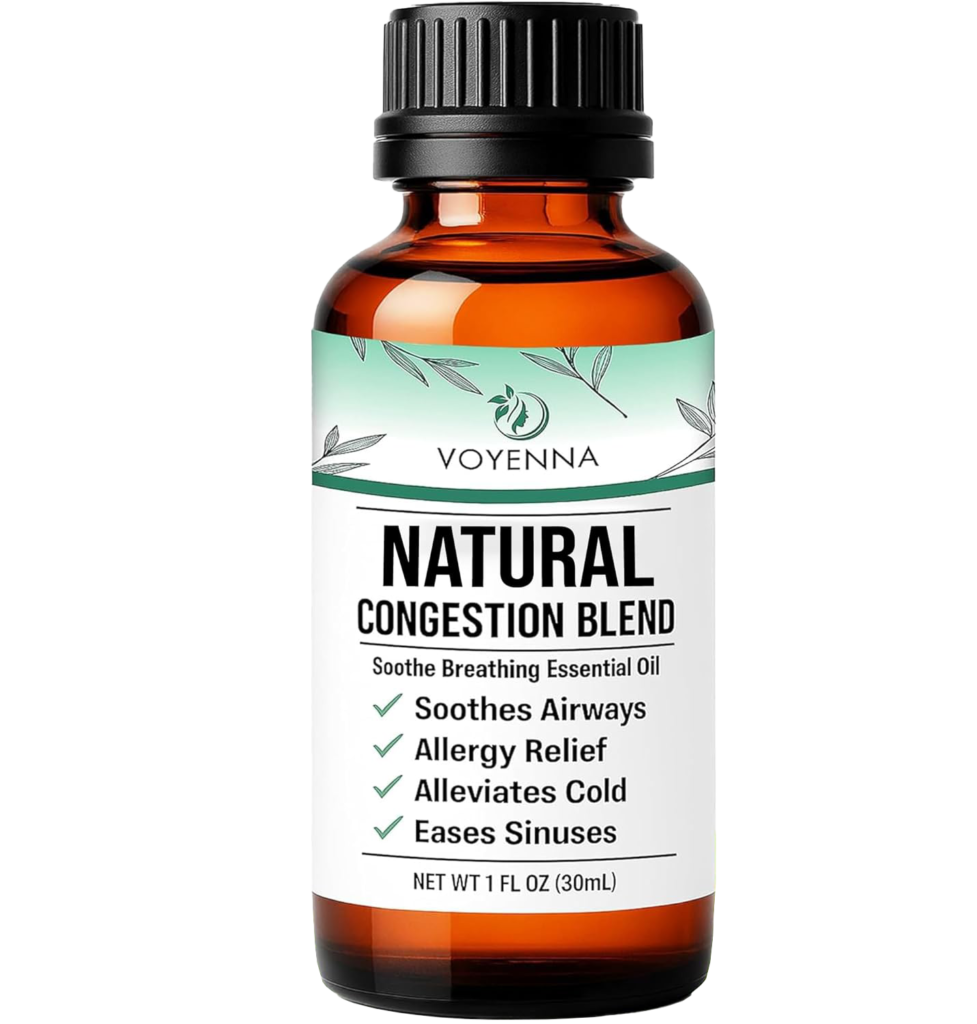
Voyenna Natural Congestion Blend was made for people who want a simple, eucalyptus-forward aromatherapy ritual when congestion, cold symptoms, or allergy symptoms make their space feel heavy and their breathing comfort needs a little extra care.
The blend includes eucalyptus, peppermint, rosemary, tea tree, and lemon essential oils. It can be used in compatible diffusers or humidifiers with an oil tray, and it can also be used for other external aromatherapy routines according to the product directions.
Use it gently. Use it intentionally. Let the scent support the moment rather than overpower the room.
The bottom line
You can put essential oils in some humidifiers, but not all of them. If your humidifier has a dedicated oil tray or aromatherapy feature, follow the instructions. If it does not, use a diffuser instead.
For a breathing-comfort routine, the goal is not to fill the room with as much scent as possible. The goal is to create a space that feels clean, calm, and easier to settle into.